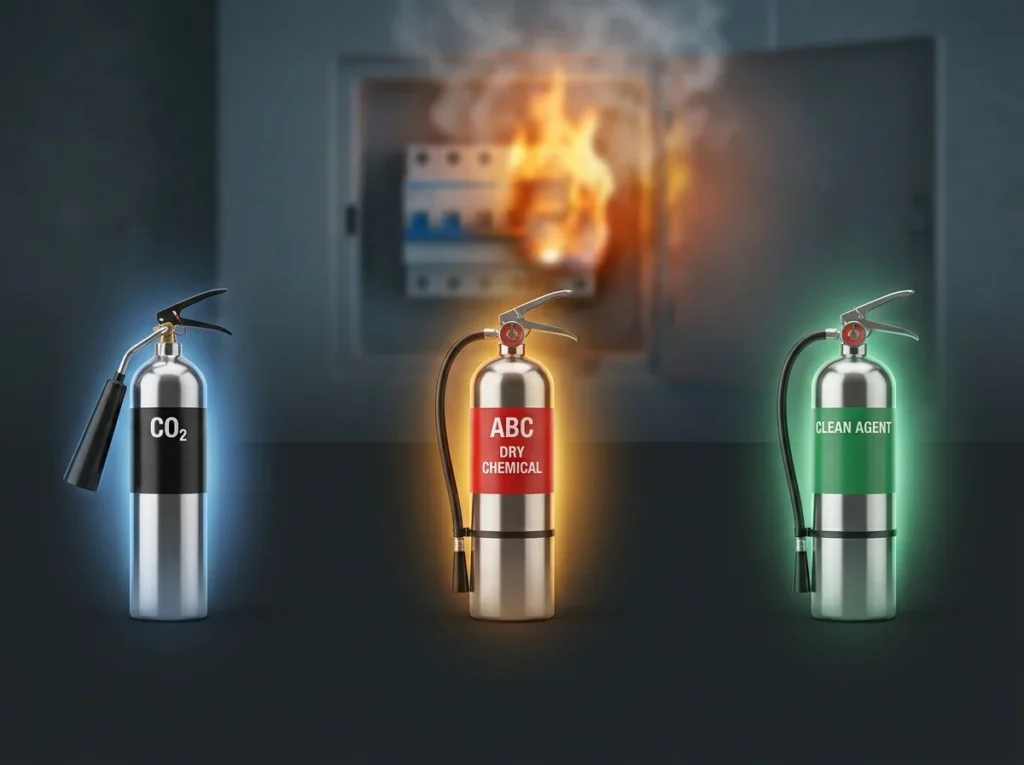
For electrical fires, use a CO2 (carbon dioxide) extinguisher or a Class C dry chemical (ABC/BC) extinguisher. Both are electrically non-conductive and safe to use on live equipment. Never use water or foam, they conduct electricity and can cause a deadly shock.
Electrical fires are one of the most dangerous types of fires not just because of the flames, but because of the live electricity involved. Using the wrong extinguisher can make the situation much worse, or even get you killed.
At GMW Fire Protection, we’ve been protecting Alaska homes and businesses for over 26 years. One of the most common questions we hear is: “What extinguisher do I use on an electrical fire?” Here’s the complete answer.
Understanding Class C Fires
In fire safety, electrical fires are classified as Class C fires. This classification means the fire involves energized electrical equipment — things like wiring, circuit breakers, outlets, motors, computers, or appliances.
The critical word here is “energized.” As long as electricity is flowing, you cannot use water or any conductive agent on the fire. If you do, the electricity travels through the stream directly to you.
The 3 Types of Extinguishers Safe for Electrical Fires
1. CO2 (Carbon Dioxide) Extinguisher — Best Overall Choice
CO2 extinguishers are the top recommendation for electrical fires. They work by displacing oxygen around the fire, smothering it completely. Here’s why they’re ideal:
- No residue: CO2 leaves nothing behind — no powder, no liquid. This is critical for servers, computers, and sensitive electronics that would be destroyed by a powder extinguisher.
- Non-conductive: Carbon dioxide gas does not conduct electricity, making it completely safe on live equipment.
- Identified by a black label on the extinguisher cylinder.
2. Dry Chemical Extinguisher (ABC or BC) — Most Common Choice
ABC and BC dry chemical extinguishers are the most widely used extinguishers in homes and businesses. The powder agent is non-conductive, making it safe for Class C electrical fires.
- ABC extinguisher: Covers Class A (wood/paper), Class B (flammable liquids), and Class C (electrical) fires. The most versatile option for general use.
- BC extinguisher: Covers flammable liquids and electrical fires only.
- Important downside: The powder leaves a thick, corrosive residue that can damage electrical equipment permanently. Not ideal for sensitive electronics.
- Identified by a blue or red label depending on the manufacturer.
3. Clean Agent Extinguisher (Halotron / FE-36) — Best for Specialized Areas
Clean agent extinguishers use a gas-based agent that evaporates completely and leaves zero residue. They’re non-conductive and safe for electrical fires.
- Where they’re used: Data centers, aviation, laboratories, telecommunications rooms, and any environment where equipment damage from powder or water is unacceptable.
- Downside: More expensive than CO2 or dry chemical options.
- Identified by green or grey labeling depending on the agent type.
Quick Comparison: Electrical Fire Extinguishers at a Glance
| Extinguisher Type | Label Color | Leaves Residue? | Best For |
| CO2 (Carbon Dioxide) | Black | No | Server rooms, offices, sensitive electronics |
| Dry Chemical ABC/BC | Blue / Red | Yes (powder) | Homes, businesses, general electrical hazards |
| Clean Agent (Halotron) | Green / Grey | No | Data centers, labs, aviation, specialized areas |
Frequently Asked Questions
What type of fire extinguisher is used for electrical fires?
CO2 (carbon dioxide) extinguishers and Class C dry chemical (ABC/BC) extinguishers are both safe for electrical fires. CO2 is the best choice for electronics because it leaves no residue. Never use water or foam extinguishers on electrical fires.
What is a Class C fire?
A Class C fire is a fire involving energized electrical equipment such as wiring, circuit breakers, computers, appliances, or motors. Any extinguisher used on a Class C fire must be electrically non-conductive.
Can I use an ABC extinguisher on an electrical fire?
Yes. ABC dry chemical extinguishers are rated for Class C electrical fires because the powder agent is non-conductive. However, the powder residue can permanently damage sensitive electronics. For equipment like computers or servers, a CO2 extinguisher is the better option.
Why can’t you use water on an electrical fire?
Water conducts electricity. If you spray water on a live electrical fire, the current can travel back up the water stream and electrocute you. Always use CO2, dry chemical, or clean agent extinguishers on electrical fires.