
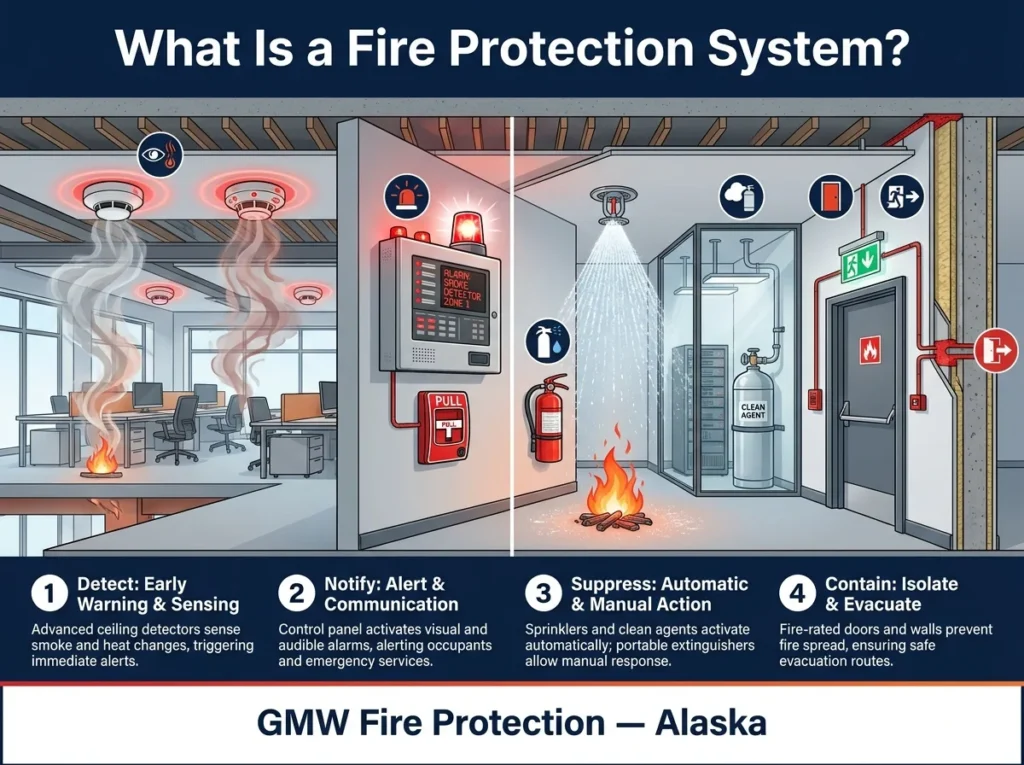
A fire protection system is a combination of equipment, devices, and structural features designed to detect fires early, alert occupants, suppress or control flames, and contain the spread of fire all working together to protect lives and property.
Think of a fire protection system the same way you think of a seatbelt. You hope you never need it but when something goes wrong, it’s the only thing standing between a close call and a catastrophe. At GMW Fire Protection, we’ve been designing and installing fire protection systems across Alaska for over 26 years. We’ve seen what happens when buildings have the right system in place and when they don’t. Here’s everything you need to know.
What Exactly Is a Fire Protection System?
A fire protection system isn’t just one device. It’s a complete set of integrated components that work together across four functions:
- Detect: Identify the presence of smoke, heat, or flames as early as possible.
- Notify: Alert everyone in the building and, in many cases, automatically contact emergency services.
- Suppress: Apply water, gas, foam, or chemicals to control or extinguish the fire.
- Contain: Use fire-rated construction to slow the spread of fire and keep evacuation routes open.
Every component in a fire protection system serves at least one of these four functions. Together, they give building occupants the time and the path they need to get out safely.
Active vs. Passive Fire Protection: What’s the Difference?
This is one of the most important concepts to understand about fire protection systems and one most building owners don’t know about.
| Active Fire Protection | Passive Fire Protection |
| Responds when fire occurs | Always working, no trigger needed |
| Fire sprinklers | Fire-rated walls and floors |
| Fire suppression systems | Fire doors and dampers |
| Smoke and heat detectors | Fireproof insulation |
| Fire extinguishers | Compartmentalized building design |
| Emergency / exit lighting | Smoke-sealed gaps and barriers |
Key Components of a Fire Protection System
1. Fire Alarm & Detection Systems
Smoke detectors, heat detectors, and manual pull stations are the ears and eyes of your fire protection system. They detect danger first and trigger the notification process. In commercial buildings, these connect to a central fire alarm control panel that can automatically alert the fire department.
2. Fire Sprinkler Systems
Sprinklers are the most common active suppression tool. Each sprinkler head activates independently when heat from a fire breaks a small glass bulb, meaning only the heads closest to the fire activate, not the entire system. This limits water damage and keeps the fire contained quickly.
3. Engineered Suppression Systems
Some environments can’t use water. Server rooms, commercial kitchens, electrical panels, and fuel storage areas need specialized suppression systems instead.
- Clean Agent Systems: Use gas-based agents (like FM-200 or Novec 1230) that suppress fire without leaving residue, protecting sensitive electronics. GMW installs and services clean agent systems across Alaska.
- CO2 Suppression Systems: Displace oxygen to extinguish fire in enclosed spaces like generator rooms and industrial equipment areas. GMW also specializes in CO2 suppression system installation.
- Foam and Dry Chemical Systems: Used in high-hazard areas like aircraft hangars and fuel facilities.
4. Fire Extinguishers
Portable fire extinguishers are the first line of defense for small, contained fires. They’re required in virtually every commercial building and must be inspected, maintained, and replaced on a regular schedule to remain compliant and effective.
5. Emergency and Exit Lighting
When a fire knocks out power, emergency lighting and illuminated exit signs guide occupants safely out of the building. These systems must remain functional during a power failure. They’re not optional, and they save lives in smoke-filled corridors.
Frequently Asked Questions
What is a fire protection system?
A fire protection system is an integrated set of technologies and structural features designed to detect fires, alert occupants, suppress or control flames, and contain the spread of fire. It includes both active components (sprinklers, alarms, suppression systems) and passive components (fire-rated walls, fire doors).
What is the difference between active and passive fire protection?
Active fire protection systems respond when a fire occurs like sprinklers activating or alarms sounding. Passive fire protection is built into the building structure and works continuously without being triggered, such as fire-rated walls and fire doors that slow the spread of fire.
How often should fire protection systems be inspected?
Fire sprinkler systems should be inspected quarterly and annually. Fire alarm systems require annual inspection. Fire extinguishers need monthly visual checks and annual professional service. GMW Fire Protection provides certified inspection and maintenance for all fire protection systems in Alaska.