

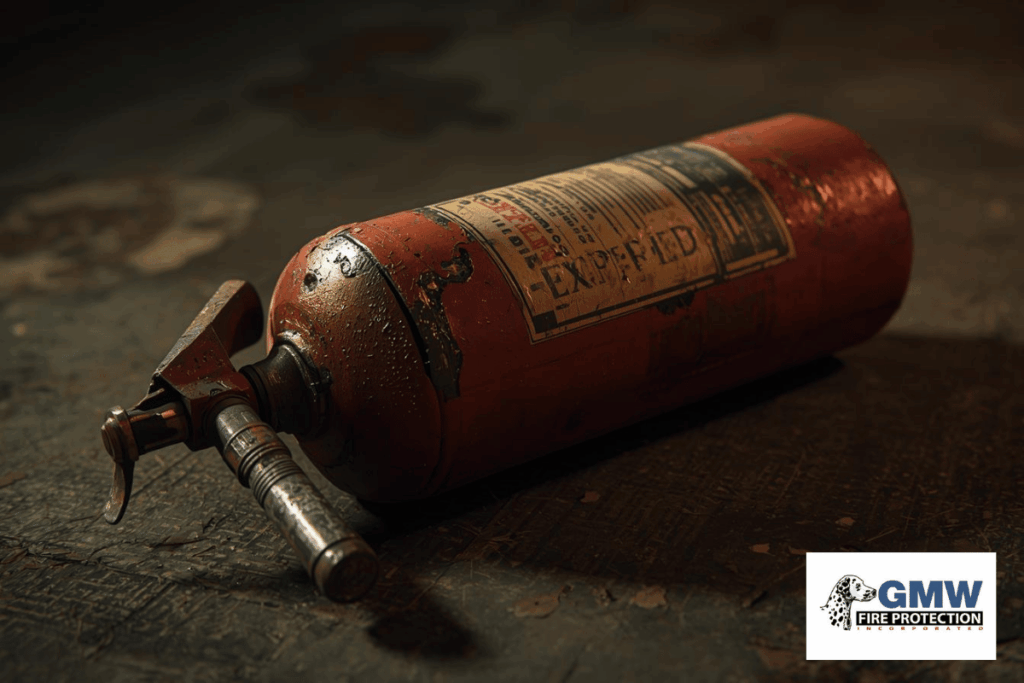
Yes – fire extinguishers do expire in the sense that they can become unreliable over time. They don’t have a “sell-by” date like food, but experts say most portable extinguishers have a useful life of roughly 10–12 years. After that period (or even sooner if abused), the extinguisher may lose pressure or develop clumps in the agent, making it unsafe. In practice, guidelines call for regular servicing and replacement rather than waiting for an obvious “expiration date”. For example, NFPA 10 – the national fire-code standard – tells us to replace disposable extinguishers about 12 years from manufacture and to recharge (or service) rechargeable units every 6 years. In plain language: if your extinguisher is over 10 years old or shows signs of wear, it’s time to have it checked or replaced.
How Long Do Fire Extinguishers Last?
The lifetime of a fire extinguisher depends on its type and maintenance history:
- Disposable (non-rechargeable) extinguishers – common small units – generally last about 10–12 years from the manufacture date. They cannot be refilled, so once they reach that age (or after any use), you replace the whole unit.
- Rechargeable extinguishers – often found in larger or commercial settings – can serve well beyond 12 years if they are regularly maintained. They should be professionally emptied and recharged about every 6 years, and given a thorough hydrostatic pressure test at 12 years (or sooner if stressed). This maintenance schedule keeps the internal pressure and agent fresh so the unit can continue safely beyond the 12-year mark. With good care, a rechargeable extinguisher’s total lifespan can reach 12+ years.
- Special types (CO₂, Halon, etc.) have their own rules. For instance, carbon-dioxide (CO₂) cylinders generally require a pressure test every 5 years, but are also effectively retired or replaced in the 10–12 year range. (Always check the manufacturer or local code for specific kinds.)
In short, a 10–12 year rule is a good rule-of-thumb for most home extinguishers. Extreme conditions (heat, humidity, corrosion) can shorten this; for example, a boat or hot warehouse extinguisher might need replacement earlier due to damp air or rust.
Signs Your Fire Extinguisher Has “Expired” or Needs Attention

Even before the calendar tells you 10 years have passed, visual inspections can reveal problems. If any of these signs are present, the extinguisher may not work when you need it:
- Pressure gauge not in the green: On rechargeables, the needle should be in the green “operating” zone. If it’s below green, the extinguisher has lost pressure and won’t spray properly; if it’s above green, it’s over-pressurized and could leak or burst. (Disposable units often have a simpler “full/empty” plastic indicator on the head.)
- Broken or missing safety pin and seal: A broken plastic tamper seal or missing pin means the unit has been jostled or used. Without the pin, the handle could be pulled by accident, or the extinguisher may not fire correctly. If the pin or seal is gone, get the extinguisher serviced.
- Physical damage or corrosion: Check the cylinder and hose carefully. Dents, cracks, rust or peeling paint, and a brittle hose are red flags. These could mean the extinguisher is weakened or leaking. Also make sure the instructions label is still legible.
- Outdated or missing inspection tag: Most extinguishers have a tag or sticker showing the last maintenance date. If the tag is missing, or shows a date far in the past, it likely needs service now. An old tag means it hasn’t been checked annually.
If you hear no sloshing or shifting sound when you gently turn a dry-powder unit upside-down, that can indicate clumping of the powder. (Modern extinguishers are designed not to require shaking, but as a check you can carefully invert it to feel for movement.) Clumps of agent or sediment at the bottom can clog the nozzle and make it fail.
Why Fire Extinguishers Go Bad
A fire extinguisher itself doesn’t spoil like milk, but its components age and wear out. Over time:
- Pressure leaks: The extinguisher is a pressure vessel. Seals, valves, and joints can develop tiny leaks. Even a slow loss of pressure makes the agent spray out weakly or not at all.
- Agent degradation: Dry-chemical powders can absorb moisture and clump together. Caked powder can clog the nozzle. While the chemical itself doesn’t “expire,” moisture and humidity can cause problems.
- Corrosion and damage: Rust or dents on the metal cylinder can weaken it and cause failures (even rupture under pressure). This is especially a worry in humid or salty environments.
- Regulatory obsolescence: Some very old extinguishers used banned substances (like carbon tetrachloride in pre-1955 units) or had unsafe designs. These models must be immediately removed from service.
Because of these issues, fire codes and manufacturers set service schedules. For example, NFPA 10 – the national portable extinguisher standard – requires professional maintenance every 6 years and a hydrostatic (pressure) test every 12 years. Meeting these requirements keeps the extinguisher in good shape. If maintenance is skipped, the extinguisher essentially “expires” when it can no longer meet standards.
Maintenance and Inspection Tips
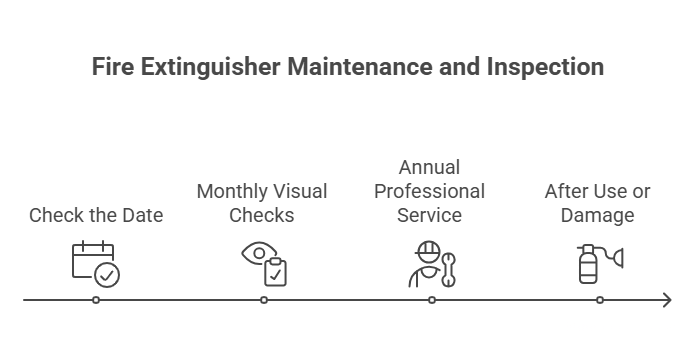
You can help catch an aging extinguisher before it fails:
- Check the date: Find the manufacture or last service date stamped on the cylinder or label. If it’s over 10 years old and hasn’t been serviced or used, it’s time to replace or test it.
- Monthly visual checks: Even at home, glance at each extinguisher monthly. Ensure it’s accessible, the gauge is in the green, and the seal/pin is intact. Remove any dust or debris covering it. In businesses, OSHA requires this monthly visual inspection.
- Annual professional service: Have a qualified technician inspect all extinguishers at least once a year. They will test the pressure, look for hidden damage, and top off or replace the agent if needed. For rechargeables, the tech will empty and refill the cylinder every 6 years, which starts a fresh “clock” on its service life.
- After use or damage: If you ever use your extinguisher (even just the test “pull” lever in training), it needs recharging right away. Also, if it falls or is physically hit, get it inspected.
When to Replace Your Fire Extinguisher
If an extinguisher fails any check above, replace it immediately. Don’t gamble on an old unit in an emergency. In general:
- Disposable units: Replace completely after about 12 years from manufacture, regardless of gauge readings. (This aligns with NFPA 10.)
- Rechargeable units: Continue recharging every 6 years, and do a full hydrostatic test around year 12. Even if they still “work,” many fire pros swap them out after 12–15 years as a precaution.
- Visible damage or empty reading: Replace at once if you see corrosion, body damage, a white “empty” gauge reading, or any malfunction.
- Uncertain age or history: If you inherit an extinguisher with no records, or it’s a hand-me-down, it’s safer to replace it than trust an unknown history. Most manufacturers stamp a date, but if in doubt, buy a new one.
Never wait for the user manual expiry date – err on the side of safety. An extinguisher that looks intact might still be weak inside. Fines or insurance penalties can apply if commercial properties let extinguishers go past their service life.
Why It Matters
Using a “bad” extinguisher can be dangerous. In a fire, an expired or under-pressurized extinguisher may spray little or no extinguishing agent, or even clog up. This could let a small fire turn catastrophic. On the flip side, over-pressurized units might rupture. Ultimately, a working extinguisher gives you a chance to safely douse a new fire. An expired one gives a false sense of security.
Bottom line: Treat your fire extinguisher as a life-saving device. Check it regularly, keep up with service, and replace it when it’s due. A little preventive care today can save lives and property tomorrow.