

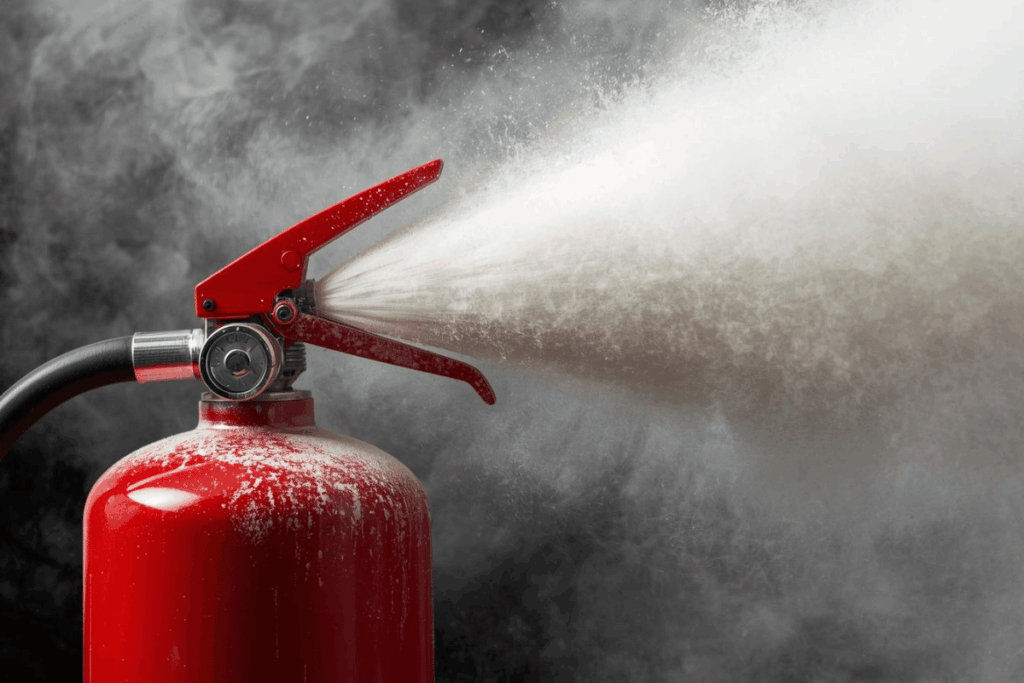
Fire extinguisher powder itself isn’t a deadly poison – it’s made of common, non-toxic chemicals like monoammonium phosphate and baking soda (sodium bicarbonate). In other words, the powder in an ABC dry-chemical extinguisher is not poisonous in the way bleach or cyanide are. However, it’s not entirely harmless either. The fine dust can irritate your eyes, nose, throat, lungs and skin if you get too much of it on or in you. So the quick answer is: no, fire-extinguisher powder isn’t toxic in normal use, but do handle it with care.
Most home and office extinguishers contain powders like monoammonium phosphate and sodium bicarbonate. These ingredients extinguish fire by smothering flames or interrupting the fire’s chemistry – not by poisoning it. For example, monoammonium phosphate releases non-toxic gases and melts into a layer that stops the fire’s reaction, while sodium bicarbonate (baking soda) releases carbon dioxide to smother flames. Because these chemicals are common and generally safe for consumer use, the powder itself isn’t classified as a “toxic” substance.
Potential Health Effects from Fire Extinguisher Powder
Even though the powder isn’t poisonous, it can bother your body. Here’s what may happen with different kinds of exposure:
- Breathing it in: The biggest risk is inhaling the dust. If you suck in a cloud of extinguisher powder, you might start coughing, wheezing, or feeling short of breath. Think of it like breathing in flour or smoke – it irritates your nose, throat and lungs. In most cases the coughing and irritation pass once you get fresh air. However, people with asthma or lung problems can feel it much more. Their symptoms (chest tightness, coughing) could last longer or get severe. If someone’s having trouble breathing after exposure, it’s safest to get medical help right away.
- Skin and eye contact: The powder can irritate skin and eyes. If powder lands on your skin it may sting, itch or make skin red. If it gets in your eyes, expect some burning and watering. These effects sound unpleasant but usually go away after you rinse the area thoroughly with water. (Experts agree that a quick wash solves most irritation.) This isn’t typically dangerous or long-lasting – it just feels uncomfortable. Wearing gloves and goggles when cleaning up the powder can help prevent this irritation in the first place.
- Accidental ingestion: Swallowing a little bit of powder isn’t likely to poison you. A tiny amount (say, a dusting on food) will probably just upset your stomach or make your throat feel scratchy Large amounts can be more serious: “eating quite a bit” might cause stomach pain, nausea or even a sore, red throat. In short, don’t taste it – but if someone accidentally swallows a small pinch, it generally won’t be life-threatening. If anyone eats a noticeable quantity, have them rinse their mouth, drink water, and call a doctor or poison control.
- Residue and electronics: After it’s used, dry extinguisher powder leaves a fine white dust everywhere. This residue isn’t highly toxic, but it can irritate skin or eyes and be very messy. It can also be corrosive to electronic devices if left on wiring or circuit boards. For example, prolonged contact with some extinguisher powders may harm computer components or appliances. That’s why cleanup is important (see below).
In summary: fire extinguisher powder is not poisonous, but it is a harmful irritant. The main symptoms of exposure are coughing, breathing discomfort, skin or eye irritation, and mild stomach upset – not organ damage or poisoning.
Safety Precautions
To minimize risks when using or cleaning up powder extinguishers, follow these tips:
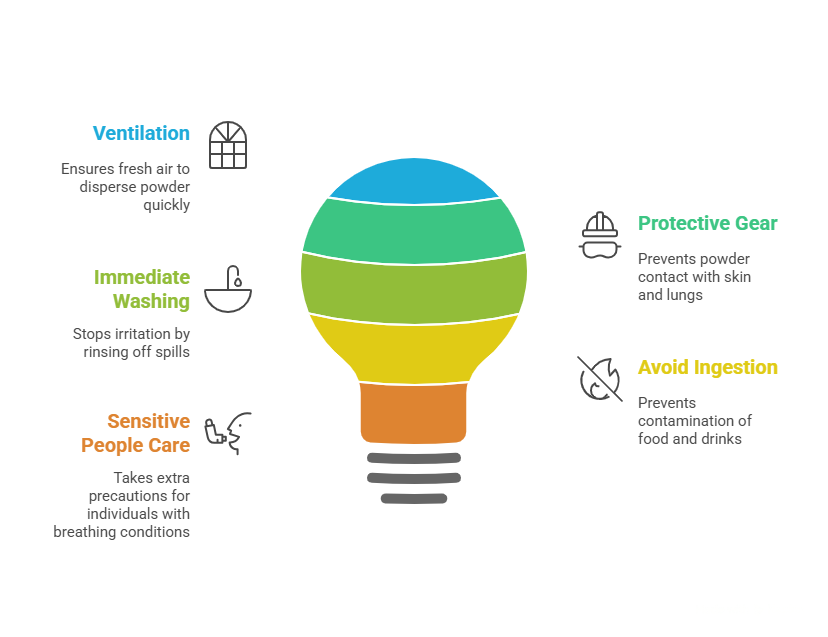
- Ventilate the area. Always use a dry-chemical extinguisher in a room with fresh air – open a window or door if you can. Good ventilation helps disperse the powder quickly.
- Wear protective gear. If you need to clean up the dust, put on a mask (at least a dust mask or N95), safety goggles, and gloves. This stops most of the powder from touching your lungs or skin.
- Wash off spills immediately. If any powder touches your skin or gets in your eyes, rinse with water right away. This usually stops irritation.
- Avoid ingestion. Don’t handle the powder near open food or drinks. Wash your hands thoroughly after any contact before eating.
- Check on sensitive people. If someone with asthma or a breathing condition is exposed, take extra care. Move them to fresh air immediately and consider seeing a doctor if they have difficulty breathing.
Cleaning Up After Use
If you do have to use a dry extinguisher, clean up the residue promptly:
- Carefully vacuum or sweep up the powder. Wear a mask while doing this to avoid making more dust airborne. Seal the debris in a plastic bag to throw away.
- Wipe surfaces with a damp cloth or mop. You can use a mild cleaning solution: for example, a 50/50 mix of water and isopropyl alcohol, or a mild vinegar solution for sodium-based powders. Let it sit for a few minutes to dissolve the powder, then rinse.
- Dispose properly. Don’t wash large amounts of the powder down drains, since it can clog pipes or affect water treatment. Instead, throw it out with regular trash (if allowed) or follow local hazardous waste guidelines.
- Recharge or replace the extinguisher. After use, have your extinguisher serviced or exchanged so it’s ready for next time.
It might sound like a lot, but the good news is that the danger from the fire itself is usually far greater than the danger from the powder. If you follow safety steps, you’ll be fine. Experts emphasize that the health risks from fire extinguisher powder are low when used properly. In other words, having a working extinguisher in your home or office protects you from fires far more than it harms you.
Conclusion
Fire extinguisher powder is not toxic like a poison, but it is a strong irritant. It won’t make you sick in small doses, but it can make you cough, sneeze, or itch if you breathe or touch a lot of it. Treat it with respect: use extinguishers when needed, ventilate, wear basic protective gear, and clean up the dust promptly. Follow these precautions and you’ll stay safe from both fire and irritation.