

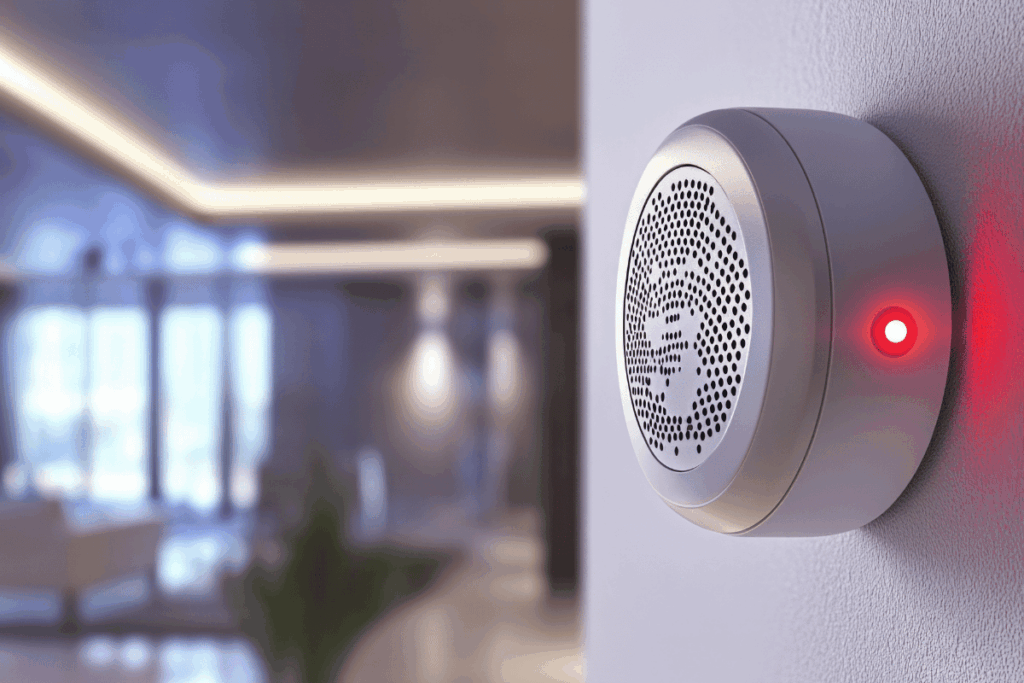
No – standard fire alarms (smoke detectors) cannot sense carbon monoxide. Smoke alarms use optical or ionization sensors to spot tiny smoke particles, not invisible gases. In other words, a typical smoke detector only beeps if there’s smoke, not when CO levels rise. If a gas-burning appliance leaks carbon monoxide without any fire or smoke, a regular smoke alarm will stay silent. (The CDC warns that CO is an “odorless, colorless gas that kills without warning,” claiming hundreds of lives each year.) For full protection, you need a dedicated CO alarm or a combination smoke/CO unit.
Why Smoke Alarms Can’t “Smell” CO
Smoke alarms are designed for fires, not gas leaks. Inside a smoke alarm there are photoelectric or ionization sensors that detect the tiny particles you see as smoke. When these sensors sense enough smoke in the air, the alarm shrieks to warn you. But carbon monoxide is a colorless, odorless gas – it makes no visible particles. A smoke detector has no way to detect pure CO molecules, so it won’t go off for a carbon monoxide leak.
By contrast, carbon monoxide alarms use a different technology. They have electrochemical sensors that react to CO gas, sounding a warning if levels become dangerous. They also use a different alarm tone (typically a low-pitched beep) to avoid confusion with smoke alarms. In short, the two alarms are built for different hazards.Carbon Monoxide: The Invisible Killer
Carbon monoxide (CO) is produced whenever fuel is burned – for example, by gas stoves, furnaces, fireplaces, car engines, or generators. It’s completely invisible and odorless. Even a small CO leak can be deadly; the CDC notes that CO “kills without warning” and causes hundreds of deaths each year. Symptoms of CO poisoning (headache, dizziness, nausea, confusion) can be mistaken for flu or fatigue, so without an alarm people may not notice until it’s too late.
Because of these dangers, CO alarms are essential. They continuously monitor the air for rising CO levels and will beep long before you feel sick. Properly installed CO detectors save lives by giving you time to ventilate or evacuate. Remember, only a CO alarm can alert you to carbon monoxide – a smoke alarm can’t do the job.
Combination Smoke/CO Detectors (Pros & Cons)
Many homeowners choose a combo alarm that handles both smoke and CO in one device. These dual-function units can be convenient, since you replace one device instead of two and only change one set of batteries. Just be careful to check the label: not all fire alarms detect CO, so make sure yours is explicitly rated for both.
However, there is a caveat: CO behaves differently from smoke. Smoke rises to the ceiling, so smoke alarms are placed high on walls or ceilings. Carbon monoxide mixes with air and often stays closer to the floor (and can slowly accumulate). Mammoth Security points out that because of this, a ceiling-mounted combo alarm might catch CO later than a floor-level detector would. For example, if a furnace leaks CO, a floor-level detector might sense it first. For best protection, consider having at least one standalone CO detector on a lower level (around sleeping areas) even if you use combo units elsewhere.
Where and How to Install Detectors
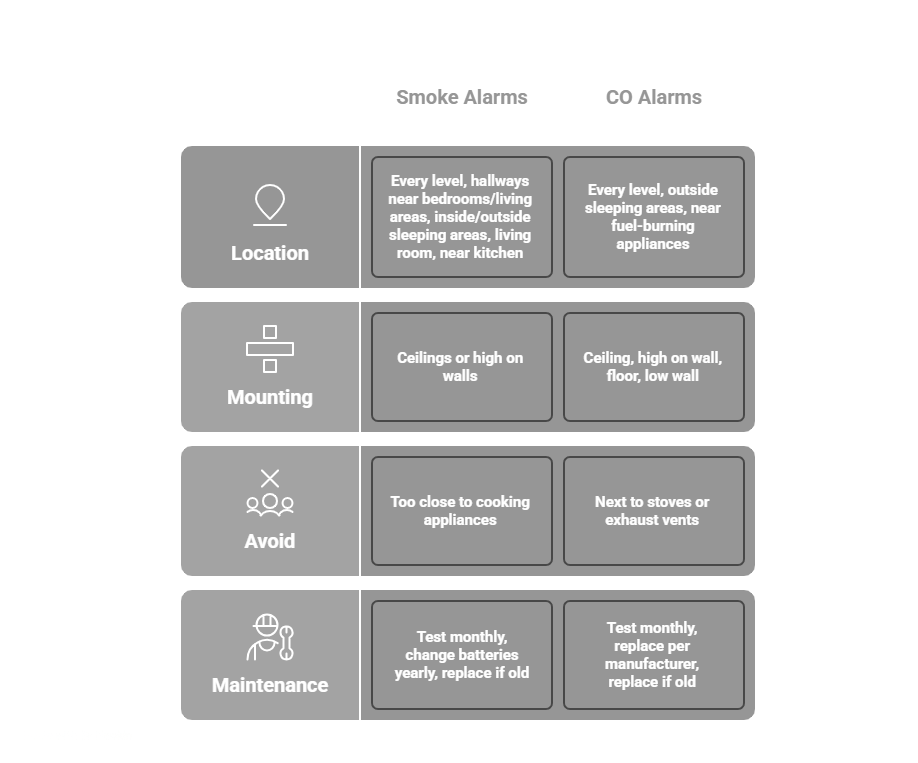
To keep your family safe, install both types of alarms in recommended locations:
- Smoke alarms: Mount on every level of your home, especially in hallways near bedrooms and living areas. Ceilings or high on walls (12 inches down) are best, since smoke rises. For fire safety, put one inside and outside each sleeping area, and in the living room or near the kitchen (but not too close to cooking appliances to avoid false alarms).
- CO alarms: Place them on each level of your home as well. The NFPA and CDC recommend at least one CO detector outside every sleeping area. Because CO mixes with air, you can put a detector on the ceiling or high on a wall – but remember it tends to settle, so floor or low wall placement also works. Also install CO alarms near fuel-burning appliances (furnaces, water heaters, fireplaces). Avoid putting them right next to stoves or exhaust vents.
- Maintenance tips: Test all your alarms monthly and change batteries at least once a year (or when they chirp). CO detectors usually have a lifespan (often 5–7 years), so replace them per manufacturer instructions. If you have an old smoke alarm from before 2010, replace it (sensors wear out). In an emergency drill, practice the sound of each alarm so you and your family know the difference.
Following these guidelines ensures full coverage. Many local building codes require both smoke and CO alarms in homes. By installing and testing both, you’ll be prepared for fires and hidden CO leaks.
Key Takeaways
- A smoke alarm alone cannot detect carbon monoxide. It only senses smoke particles.
- Carbon monoxide alarms (or dual smoke/CO alarms) are required to detect CO gas.
- CO is a “silent killer” – odorless and invisible – so you must have a working CO detector for safety.
- For best protection, use both alarms: smoke detectors on ceilings/high walls and CO detectors near bedrooms and fuel appliances.
- Always test your alarms and replace them when needed to keep your home safe.
In summary, don’t rely on a fire alarm for carbon monoxide protection. Use the right detector for each danger. By doing so, you’ll breathe easier knowing your family has the best defense against both fire and invisible CO gas.