

A building needs a fire pump whenever its fire sprinkler or hose system requires more water pressure or flow than the available supply can provide. In plain terms, if a building is very tall, very large, or has unusually high fire-water demand (for example, heavy occupancy or storage of flammable materials), the municipal water mains may not deliver enough pressure to drive sprinklers and standpipes. In those cases the fire protection system won’t work properly without a pump to boost the water. For example, a high-rise apartment or warehouse might lose dozens of pounds of pressure just lifting water up many floors, so the code will require an on-site fire pump to ensure sprinklers on the top floors have at least 7 psi to open. In short, if the designed fire-flow pressure drops below what the supply can deliver, a fire pump is required.
Key Situations That Trigger a Fire Pump
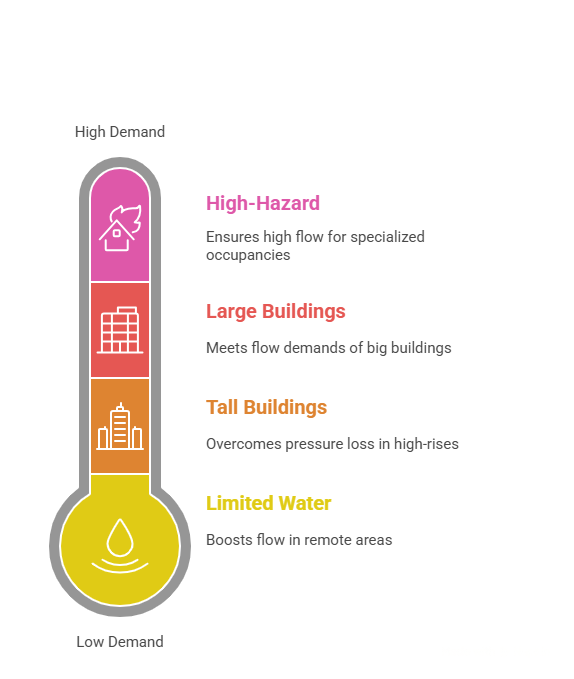
- Weak or Limited Water Supply. If the local water mains (or a well) can’t provide enough pressure or volume, you need a pump. Rural or remote buildings (like in parts of Alaska) often face low city pressure or long runs from hydrants, so a pump (often with a tank) boosts flow.
- Tall Buildings (High-Rise). Height causes pressure loss – about 0.43 psi per foot upward. Many codes call out thresholds (typically around 55–75 feet). For instance, New York City code requires any building over roughly 75 ft tall (high-rise) to have automatic standpipes with a fire pump. In California, any building over four stories must have a fire pump to feed its sprinklers and standpipes. In general, if your highest occupied floor is more than about 55–75 ft above the fire access level, plan on a pump.
- Large Floor Area or Heavy Occupancy. Very big buildings can demand high water flow. Codes often trigger standpipe (and pump) requirements when floor area or occupant load is large. For example, some rules say a 2-story building with ≥10,000 ft² on a floor, or a 3+ story building with ≥7,500 ft² per floor, must have a class III standpipe – which typically requires a pump. Likewise, if any floor above ~55 ft has 30+ people, or any floor above ~75 ft has any occupants, a pump is usually required.
- High-Hazard or Specialized Occupancies. Buildings with high fire risk (warehouses of combustible stock, manufacturing plants, labs, hospitals, data centers, etc.) often need very high flow rates. Even if not extremely tall, their sprinkler demand may exceed supply. In such cases a fire pump (and often a storage tank) is installed to meet the larger water demand safely.
These factors are often written into fire codes and standards. For example, NFPA 20 (the fire pump standard) and NFPA 13 (sprinkler design) set the technical rules, and local codes (like the International Fire Code/Building Code adopted by Alaska) incorporate them. Essentially, whenever a fire sprinkler design (using hazard and area calculations) shows that the needed water flow/pressure is higher than what the city can supply, a fire pump is required.
How Water Supply Issues Lead to a Pump
Buildings in cold climates or remote areas (like much of Alaska) can especially need pumps. For example, insufficient water pressure is a common cause – public mains may only give 40–60 psi at hydrants, which might be too low once you add head losses. Engineers verify available water by flow-testing hydrants; if the test shows “pressure at sprinkler demand” is too low, a pump is the solution. Likewise, water volume limits can trigger a pump: a big warehouse fire could call for hundreds of gallons per minute, more than a small town main can sustain.
In practical terms, think: Could a fire truck simply pump enough water via hoses in a fire? If not (because of low static pressure or limited flow), then the building needs its own pump. A fire pump takes suction from a reliable source (a hydrant, tank, or well) and pushes the needed water out at higher pressure. It turns a marginal supply into a powerful, guaranteed supply.
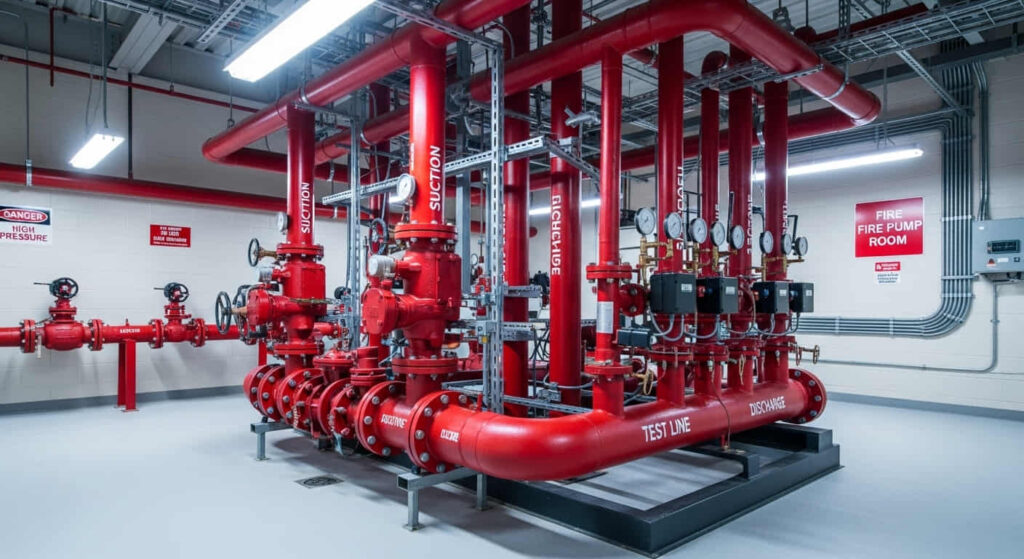
A fire pump room might house equipment like the red pump shown above. These pumps boost municipal water pressure to feed the sprinkler or standpipe system. In this example, the large motor-driven pump increases the flow so that even upper floors or distant parts of the building get enough water. Without that boost, sprinklers on higher floors or in long lines could fail to activate during a fire.
Staying Code-Compliant and Safe
Because the rules can be complex, building owners should work with fire protection professionals to decide if a pump is needed. Inspectors and engineers will calculate the sprinkler demand (per NFPA 13) and compare it to a water-flow test. If a pump is required, it must be installed per NFPA 20 and local code (in a fire-rated room or enclosure) and then tested regularly (NFPA 25 requires weekly churn tests and annual flow tests for pumps in critical applications). Failure to have a required pump (or a functioning one) can lead to impaired systems or code violations.
For example, the state of California explicitly says any building over four stories tall needs a fire pump for its sprinkler/standpipe system. Alaska follows similar international fire code standards (with local amendments), so if your Alaska building is very tall, has huge floorplates, or sits where water pressure is low, expect a fire pump will be required.
Getting the Right Help
If you’re not sure whether your building needs a pump, it’s best to consult a fire protection engineer or contractor. In Alaska, GMW Fire Protection is a local leader in this field. Their expert team “designs, installs, and maintains fire pumps specifically for sprinkler systems, providing a reliable water supply to combat fires effectively”. Whether you own a downtown high-rise or a rural facility, GMW can assess your water supply, advise on code compliance, and install the correct pump and controls.
In summary: use a fire pump whenever the sprinkler/standpipe demand exceeds the natural water pressure or flow. Tall buildings, large areas, heavy occupant loads, hazardous contents, or weak water mains all point toward needing a pump. Working with professionals like GMW ensures your fire pump system is designed right, giving you and your building effective fire protection and peace of mind.