
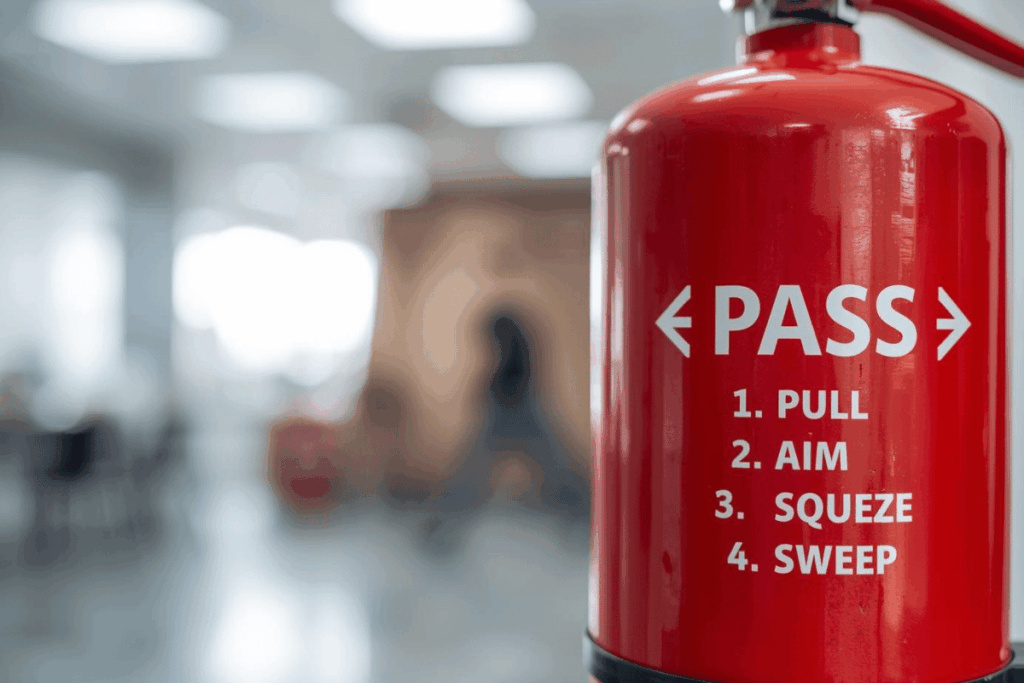
You’ve probably heard the acronym PASS in fire safety training. PASS simply stands for Pull, Aim, Squeeze, Sweep – the four basic steps for using a portable fire extinguisher. This easy-to-remember guide helps you act quickly and correctly in an emergency. In fact, fire safety agencies like the U.S. Fire Administration explicitly teach PASS as the standard method for extinguishing small fires. In short, when a fire breaks out, you pull the pin, aim the nozzle at the base of the fire, squeeze the handle to spray, and sweep side-to-side until the flames go out.
The PASS Steps: Pull, Aim, Squeeze, Sweep
- Pull – Remove the safety pin. Every fire extinguisher has a safety pin or latch that prevents accidental discharge. Pull this pin out first. Removing the pin breaks the seal and allows the extinguisher to be activated. Think of it like arming the extinguisher so it’s ready to use.
- Aim – Point at the fire’s base. Aim the extinguisher’s nozzle or hose at the base of the flames, not at the top of the fire. Why? The base is where the fuel (wood, paper, etc.) is actually burning. If you spray only at the tip of the flames, you might miss the fuel source and the fire can keep burning. Aiming low and at the center of the fire ensures the extinguishing agent reaches what’s actually burning.
- Squeeze – Press the handle. Squeeze the extinguisher’s trigger or handle to release the extinguishing agent. Do this with a firm, steady grip. A smooth, even squeeze will discharge the spray steadily. Many extinguishers use a dry chemical, foam, or CO₂ – squeezing the handle releases these agents. Keep your trigger squeezed to continually spray until the extinguisher is empty or the fire is out.
- Sweep – Sweep side to side. With the nozzle still aimed at the base, sweep it from side to side across the fire. This spreads the extinguishing agent over the entire fuel area. As one official guide says, “Sweep the nozzle from side-to-side” across the fire’s base. Continue sweeping steadily; move closer as the flames die down, but never get too close too fast. The sweeping motion ensures the fire is fully covered and reduces the chance it will flare up again.
Each step of PASS works together: pulling lets you spray, aiming targets the fuel, squeezing releases the agent, and sweeping covers the fire. By following PASS, you direct the extinguisher’s contents right where they can cool and smother the fire most effectively.
Before You Use an Extinguisher: Safety First
PASS is essential for small fires, but never forget your own safety. Only use a fire extinguisher if all of the following are true:
- The fire is small and contained. It should be something like a trash bin or a stove fire – not a raging blaze. Extinguishers are designed for early-stage fires.
- You have alerted others and called for help. Always notify building occupants and dial emergency services (911) before or while attempting to fight even a tiny fire.
- You have a clear escape path behind you. Never fight a fire with your back to a dead end. If the fire starts to spread or any doubt arises, leave immediately.
If any of those conditions aren’t met, evacuate immediately and let the fire department handle it. As training materials emphasize, “if [the fire] is too large or uncontrollable, do not jeopardize your safety”. In other words, remember that PASS is only for quick use on small fires. If the flames grow, get out and stay out.
Here are a few additional tips to keep in mind:
- Aim at the base, not the flames. Cover the entire burning area by sweeping the nozzle all across.
- Stay calm and methodical. Even in a crisis, remember the four steps of PASS as your quick checklist.
- Get proper training. Your team should practice with real (training) extinguishers. Training ensures everyone is confident using PASS correctly. Untrained people or those who are physically unable (for example, small children or very elderly people) should never try to fight fires.
- Use the right extinguisher. Make sure the extinguisher type matches the fire (Class A, B, C, etc.). Using the wrong type can make things worse (for example, never use water on an oil fire).
Key Takeaways
PASS is the standard, easy-to-remember technique for fire extinguishers: Pull the pin, Aim low, Squeeze the handle, and Sweep side to side. By following these four steps, you target the fuel source of the fire and cover it thoroughly, which extinguishes flames safely and effectively. Always remember: only use an extinguisher on a small fire if it’s safe to do so. If the fire grows or you feel unsafe, exit at once and call 911. With PASS in mind and proper training, you’ll be equipped to act swiftly and confidently in a workplace fire emergency.