

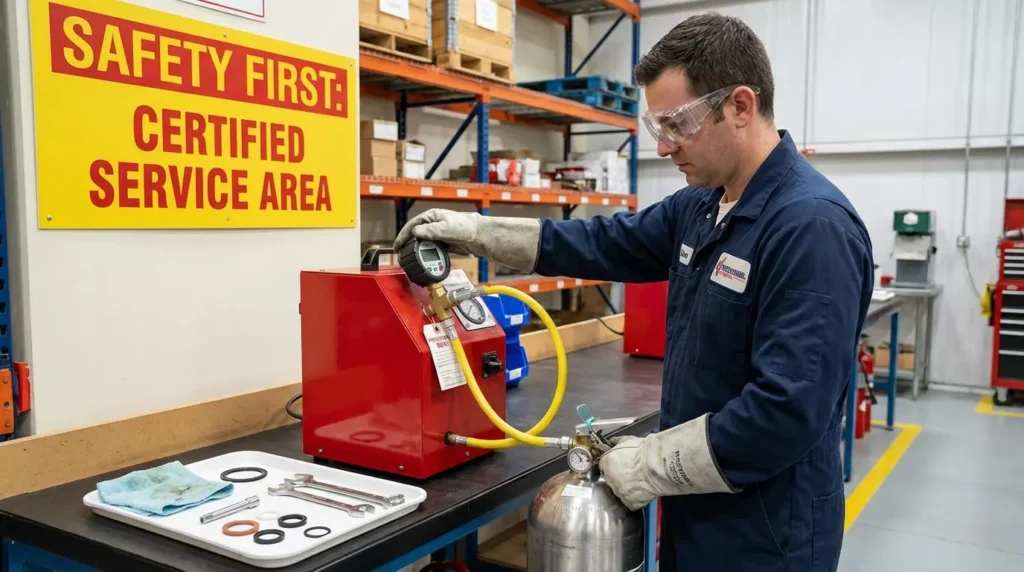
Yes, most rechargeable fire extinguishers can be refilled (technically recharged) after use. In practice, this means metal-cased cylinders with a pressure gauge (common ABC dry-chemical, CO₂, water/foam, and kitchen wet-chemical extinguishers) are designed for multiple uses and professional servicing. In contrast, small disposable units (often with plastic valve heads and a simple “full/empty” gauge) cannot be refilled and must be replaced after any use. For example, if you spray even a little from your extinguisher, it will lose pressure and needs a refill immediately.
Identifying Rechargeable vs. Disposable Extinguishers
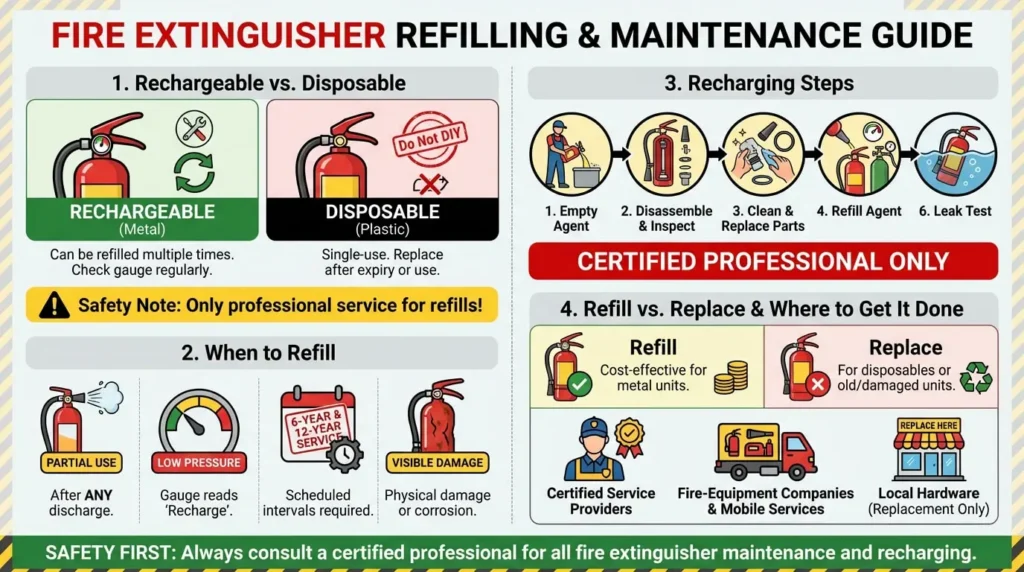
Rechargeable extinguishers typically look like this: a sturdy metal cylinder with a pressure gauge. Common refillable types include multi-purpose dry-chemical (ABC) units, CO₂ fire extinguishers, wet-chemical (Class K) kitchen extinguishers, and water/foam extinguishers. These all have metal valve assemblies and are built to be inspected and refilled. By contrast, disposable home units have plastic valves, a simple “Full/Empty” indicator, and labels like “Discharge and Dispose.” Those disposable models cannot be recharged and must be thrown away after one use. Always check your extinguisher’s label or manual – if it says “non-rechargeable,” it must be replaced rather than refilled.
When to Refill (Recharge) Your Extinguisher
Fire extinguishers need professional recharging under several conditions:
- After any use (even partial): Any discharge lets out pressure. Industry guides stress that you must recharge immediately after using an extinguisher. Even a brief squirt reduces its pressure and effectiveness.
- Pressure gauge drops: Inspect monthly. If the gauge needle ever points in the red “Recharge” area (or is outside the green zone), the unit is not charged and needs service. A low-pressure extinguisher won’t work in an emergency.
- Scheduled maintenance: Standards (NFPA 10) call for a 6-year internal maintenance on most stored-pressure dry-chemical extinguishers. That means every six years you must empty the cylinder, inspect all parts, and then refill it. A 12-year hydrostatic test (pressure test) is also required (which includes emptying and recharging afterward).
- Visible damage or defects: If you see corrosion, dents, leaking, or if a professional inspection fails, you should service or replace it immediately.
Following these guidelines makes sure the extinguisher is ready when needed. For example, one fire safety company notes that even intact extinguishers can slowly lose pressure over time, so sticking to the 6- and 12-year service schedule is crucial.
How Recharging Works
Professional recharging is a precise, multi-step process: technicians
- Empty and depressurize: They safely discharge any remaining agent and release all pressure.
- Disassemble: The valve and internal parts (siphon tube, etc.) are removed.
- Clean and inspect: All components and the cylinder interior are cleaned and checked for damage or corrosion.
- Replace worn parts: Seals, O-rings, or any faulty pieces are replaced.
- Refill agent: The exact extinguishing agent (dry chemical, CO₂, etc.) is added by weight according to the manufacturer’s instructions.
- Repressurize: The cylinder is pressurized to spec (often with nitrogen for dry-chemical units).
- Leak test and reassembly: They test for leaks, reinstall the nozzle or hose, and verify the weight/pressure is correct. Finally, the unit is reassembled, tagged, and sealed.
This thorough procedure ensures the extinguisher is safely charged and code-compliant. It requires calibrated equipment and training, so it’s not something to DIY.
Use a Certified Professional
Even for a standard home extinguisher, recharging should be left to the pros. Certified fire-equipment dealers have the proper tools and training to handle pressurized cylinders safely. They follow manufacturer specs exactly—checking the fill weight, replacing seals, and verifying pressure. Non-professionals should never attempt it, because mistakes can cause a cylinder to burst or fail when you need it. Industry guidelines explicitly warn against DIY recharges: only a qualified dealer or fire-service company should recharge extinguishers.
Refill vs. Replace
For many home extinguishers, it’s worth weighing cost and convenience. Disposable units with plastic heads must be replaced after any use. If yours is rechargeable, compare prices: a professional refill might be on the order of $25–$50, whereas a new 5–10 lb extinguisher often runs $60–$100. For a small unit, some people find it easier to just buy a new one after use. But for larger or commercial-grade extinguishers, recharging usually saves money in the long run. One safety guide even notes that properly maintained extinguishers tend to cost less per year when recharged instead of replaced. Always check your unit’s age and condition: if it’s near 6–12 years old or badly corroded, replacement might be the safer choice.
Where to Get It Done
Seek out certified fire-equipment service providers for refilling. Common options include:
- Fire equipment companies: Specialized service centers and fire-protection dealers that handle all types of extinguishers. They offer on-site or drop-off recharging.
- Local fire departments: Some fire stations provide refilling services or can refer you to approved vendors. It’s a good idea to call your local department and ask.
- Hardware/Home stores: A few large home-improvement retailers offer basic refill services for small extinguishers. Check with major chains near you.
- Mobile service providers: Certain companies operate vans that come to your home or business to inspect and recharge multiple extinguishers on-site.
Wherever you go, make sure the technician is certified and follows NFPA/OSHA requirements. Documenting each service visit is important for safety and insurance. In many cases, a quick web search for “fire extinguisher recharge near me” or a call to your fire department will point you to a reliable provider.
In summary, yes, fire extinguishers can be refilled – but only the right kind (metal, gauge-equipped models) and only by trained professionals. Keep an eye on the pressure gauge, service the unit after any use, and never ignore regular maintenance. Doing so ensures your extinguisher will be ready to work when you need it.