

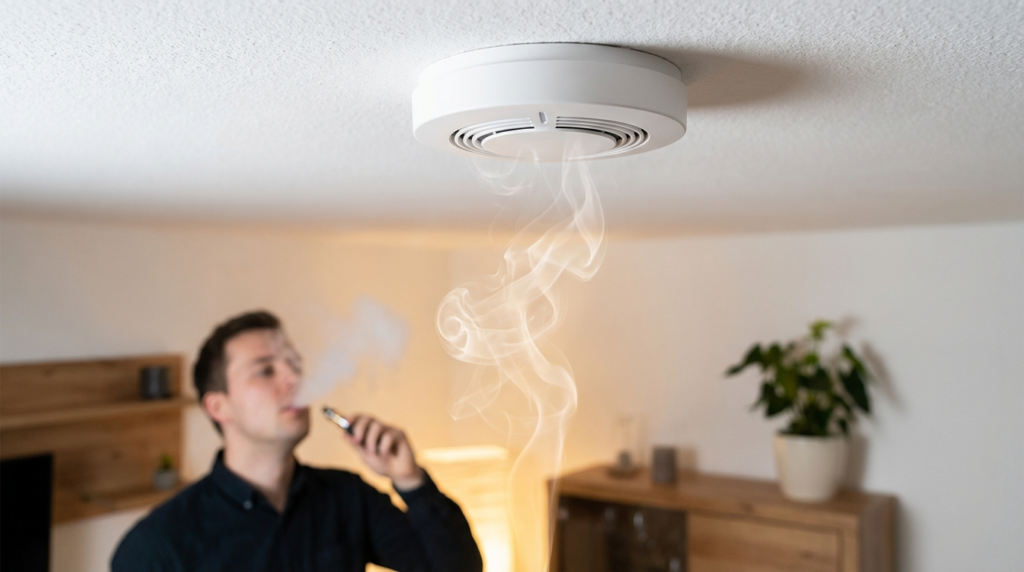
Yes, a vape can trip a smoke alarm in the right conditions. Vape pens emit tiny liquid droplets into the air, and smoke detectors look for particles. If you blow a thick cloud of vapor near a sensitive detector, it may mistake it for smoke. In other words, the aerosol from an e-cigarette can scatter the detector’s light beam or disrupt its ion flow, triggering the alarm just like real smoke. However, casual vaping in a well-ventilated space usually won’t set off an alarm. The risk goes up in small rooms (like bathrooms or hotel rooms) or if you exhale directly under the alarm.
How Smoke Detectors Work
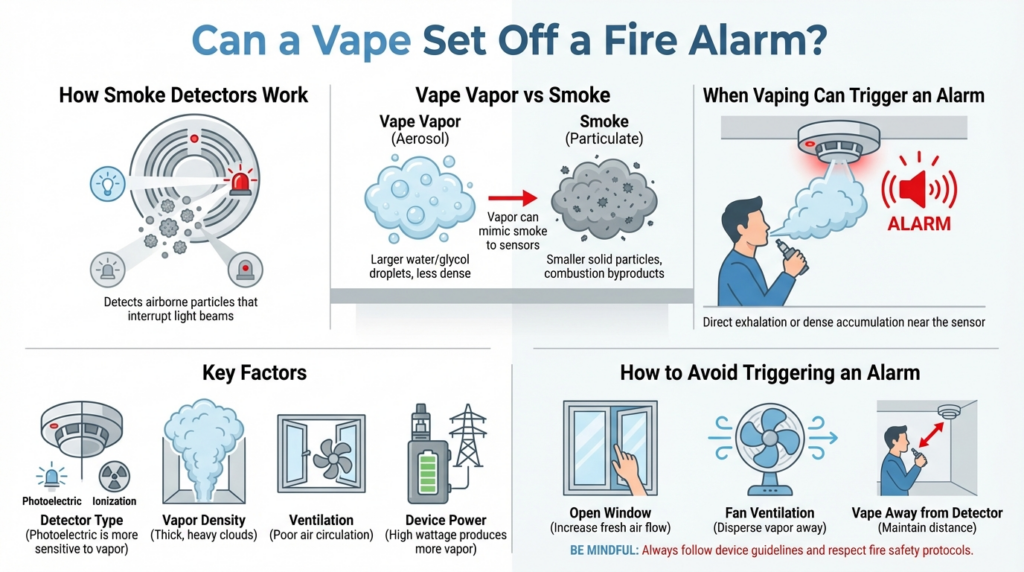
Modern smoke alarms are very sensitive. Most use photoelectric or ionization sensors to spot fire by sensing particles in the air. Photoelectric alarms shine a light beam inside a chamber – smoke (or dense vapor) will scatter that light and trigger the alarm. Ionization alarms pump a small electric current through air; smoke or vapor particles disrupt the current and set off the alarm. Heat alarms, by contrast, only react to high temperatures (usually above ~58 °C) and aren’t triggered by smoke or vapor. In short, vapor particles can fool smoke sensors. Vapor clouds behave just like very light smoke in this setup.
Why Vapor Can Trigger Alarms
A dense vape cloud can easily mimic smoke to a detector. Even though vape aerosol contains no real fire or burning material, its droplets still scatter light and interrupt ion flow in the detector’s chamber. For example, blowing a thick plume of vapor directly at a photoelectric alarm will scatter its internal light beam and set it off. In practical terms, this means if you vape in a small, enclosed room or directly under a ceiling sensor, the alarm might go off even with no fire. If vaping occurs near a smoke detector, the particles may interrupt the detector’s function, causing a false alarm”. So yes, a strong puff in the wrong spot can trip the alarm.
Key Factors That Influence Detection
Several things determine whether vaping will set off an alarm:
- Detector Type: Photoelectric alarms are most likely to be fooled, since vapor easily scatters their light beam. Ionization alarms are also sensitive to the fine particles in vapor, especially if the cloud is very dense. Heat-only alarms won’t react to vapor at all.
- Vapor Density: The thicker the cloud, the higher the risk. A small puff that dissipates quickly usually won’t alarm a detector. But a long, direct exhale into the sensor can. In short: dense, direct clouds trigger alarms much more than light, dispersed vaping.
- Device Power & E-Liquid: High-powered vape kits (especially “sub-ohm” devices) produce very large clouds, while low-power e-cigarettes give smaller plumes. Similarly, e-liquids rich in vegetable glycerin (VG) make thicker clouds than propylene glycol (PG). Using a lower-powered device or a 50/50 VG/PG mix can reduce vapor output and lower risk.
- Environment & Ventilation: Small, poorly-ventilated spaces allow vapor to build up. In a cramped hotel bathroom or a car with windows up, even moderate vaping can flood the area with aerosol. By contrast, a room with open windows or fans will disperse vapor quickly. Good ventilation – open a window or use an extractor fan dramatically cuts down airborne particles.
- Smoke Alarm Sensitivity: Many modern buildings use very sensitive detectors (especially places that ban smoking indoors). Hospitals, airplanes, and hotel corridors often have alarms tuned to pick up even tiny smoke signatures. In those settings, even a small vape trail might set off an alarm.
In short: a vape’s effect on alarms depends on detector technology and vaping habits. Ionization detectors “are particularly sensitive to small particles, including vape particles,” while photoelectric alarms can be triggered by any light-scattering vapor.
Tips to Avoid Triggering Alarms
To vape safely indoors and avoid false alarms, follow these guidelines:
- Watch Your Position: Never exhale directly under or toward a ceiling detector. Even aiming sideways near the device can trigger it. Instead, vape further away and downward, letting the vapor drift away.
- Ventilate Well: Crack a window, open a vent, or turn on a fan so vapor disperses quickly. Good airflow dilutes the cloud before it reaches any alarms.
- Use Low-Power or Small Devices: High-power “cloud-chasing” mods make huge plumes. Switch to a smaller pen-style e-cigarette or set your device to a lower wattage; the thinner stream is less likely to alarm.
- Limit VG and Cloudy E-Liquids: E-liquids with very high VG levels (over 70%) produce dense white clouds. If alarms are a concern, choose a balanced (50/50) VG/PG juice. This yields visible vapor, but much less than “cloud-killer” mixes.
- Give It Time: If you just vaped heavily, wait a minute or two before returning to the room with alarms. The lingering haze will mostly clear in that time.
- Know the Rules: Many hotels, offices, and apartment buildings have strict no-vaping policies. Always check before lighting up – you could trigger an alarm or incur a fine.
- Smoke vs. Vapor: If a detector does go off after you vape, explain that it was vapor, not smoke. But remember: the alarm can’t tell the difference – all it knows is “particle cloud”.
Sprinklers and Heat Alarms
It’s worth noting that fire sprinklers and heat alarms won’t be triggered by vaping. Sprinkler heads rely on high heat, not smoke or vapor. In fact, sprinkler bulbs won’t break unless the temperature hits around 155–165 °C, which never happens from vaping. So rest assured: no matter how dense the vape cloud, it won’t make the sprinklers rain. Only smoke- or vapor-sensitive detectors (the smoke alarms) can go off.
Conclusion
In summary, vaping can set off a fire alarm, especially in tight spaces or near sensitive photoelectric detectors. The key is to vape responsibly: limit big clouds indoors, keep distances, and ventilate well. If you do trip an alarm, stay calm – explain the situation. Remember, safety first: these detectors are meant to save lives. When in doubt, vape outside or in a designated area. By understanding how alarms work, you can avoid false alarms and stay vaping safely in shared spaces.